
Op-Ed: The Great (Downfall of) Salt Lake
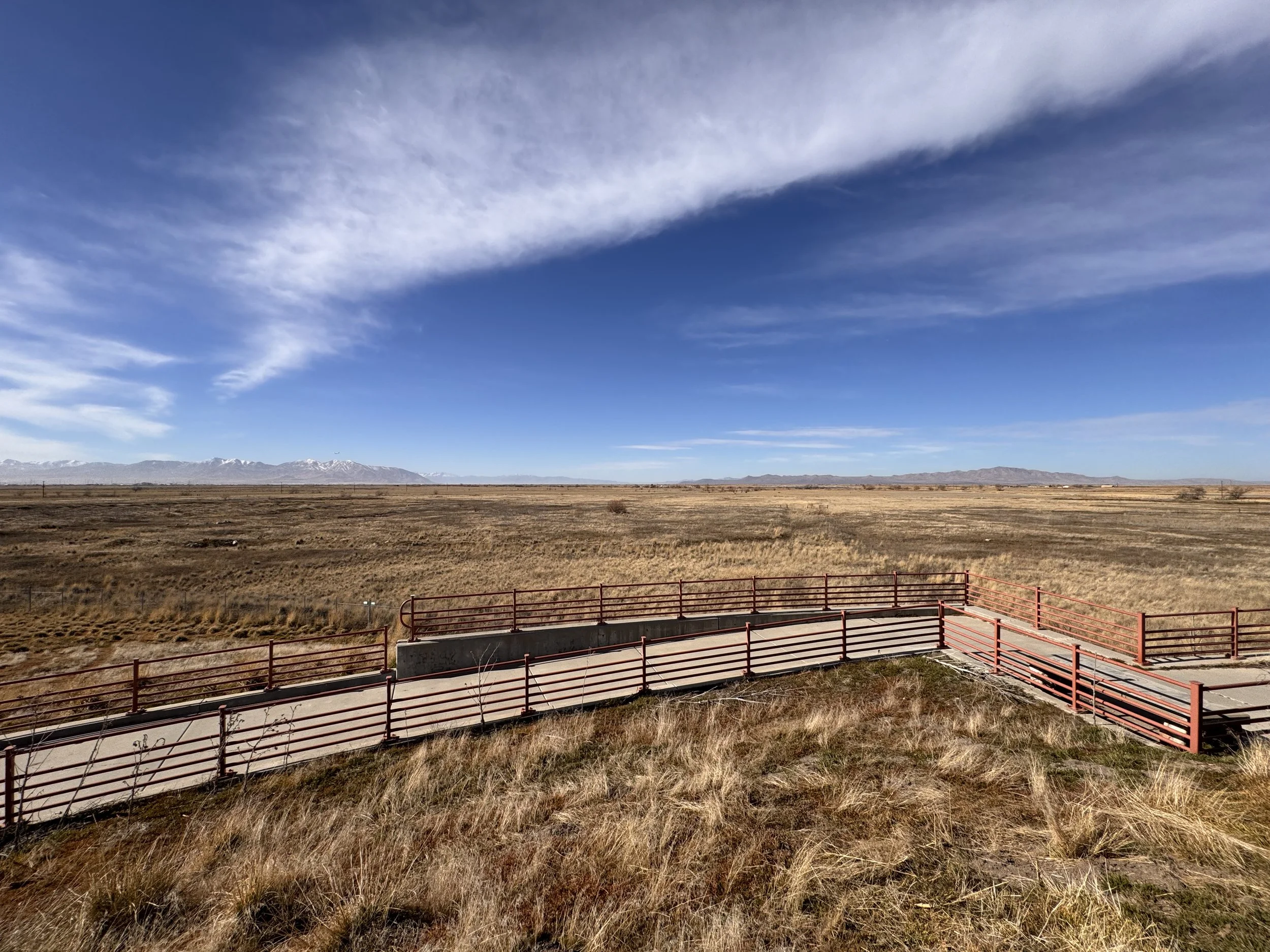
As the years have passed, the levels on the Great Salt Lake have ebbed and flowed. But now, the lake sits at a critical point — a junction that could spell disaster if lawmakers don’t act quick enough. Photo by Andy Cupp.
As pioneers settled in the Midwest of North America in 1847, their right to freely practice their religion was finally realized. Fireplaces built into each family-centered home filled living spaces with warmth. By the 1880s, coal and wood were the primary fuels used to stay snug. What filled the skies on cold winter nights seemed not to matter.
Salt Lake County would later grow to 1.21 million residents by 2024. The risks of living here are significant: proximity to the Wasatch Fault line and potential impacts from a long-overdue supervolcanic eruption in Yellowstone. Yet, rated the sixth most kid-friendly metro area in America, families of all backgrounds continue to find comfort in staying put.
There is just one issue: pollution is becoming impossible to ignore. The seasons feel as though they are slowly disappearing, blending into the bipolar weather patterns locals have come to normalize. Dust pollution, combined with industrial and vehicular emissions, creates inversions that consistently rank Salt Lake City among the worst in the nation for toxic air. What are officials doing to ensure their constituents can live — and breathe?
Air quality concerns were first formally addressed in 1891. After years of documented pollution and public indignation, the city enacted its first air-quality regulations, requiring smoke-capturing appliances and issuing fines to violators. By the early 1900s, governing officials were promoting industrial expansion while simultaneously proposing strict ordinances aimed at residents.
Historian Tom Moore argues that by the late 1920s, the city disproportionately targeted apartment buildings and private homes rather than manufacturers, which were responsible for most of Salt Lake’s pollution. Public support for clean-air initiatives plummeted during the Great Depression as economic survival took priority.
By the mid-1930s, air quality had worsened again, prompting renewed public outcry led by the Salt Lake Women’s Chamber of Commerce. These women advocated for alternatives to combat the city’s pollution, collaborating with scientists and industry professionals. Still, Salt Lake City largely turned a blind eye to local environmental concerns during World War II.
By the 1950s, most homes had converted to natural gas. Although the state eventually built a coal-processing plant — an idea first discussed by the SLWCC — its operation proved short-lived and largely ineffective.
The 1960s brought a new pollutant: unregulated vehicular emissions. Alarmed, Utah legislators commissioned a scientific study of Salt Lake City’s air quality. When the findings revealed serious concerns, lawmakers classified air pollution as a public nuisance. The Air Conservation Act of 1967 marked the beginning of a new Environmental and Air Quality Board.
The federal government soon followed suit. After studies revealed lax regulations within federal facilities, Congress established the Environmental Protection Agency. EPA research later found that shutting down a nearby plant cut hospital admissions for bronchitis and asthma in children by half compared to periods of normal plant operations. Ongoing studies show that facilities such as U.S. Magnesium continue to emit harmful chemicals, including chlorine and bromine.
The most recent significant improvements in air quality occurred in 2019, when Governor Gary Herbert requested that major refineries begin producing the EPA’s Tier 3 low-sulfur fuel to support cleaner air along the Wasatch Front. During the COVID-19 pandemic, global ozone levels improved, and Salt Lake City recorded some of its best air-quality readings in 2020 due to reduced vehicular emissions.
Beyond industrial and vehicular pollution, the city faces another looming crisis: the Great Salt Lake. Over the past 170 years, the lake has steadily declined. According to Nature Geoscience, overconsumption is the primary driver of its disappearance. Scientists at Brigham Young University warn the lake is likely to dry up by 2028, placing brine shrimp and other lake-dependent wildlife at immediate risk of extinction as salinity levels spike.
Much of the lake is fed by runoff streams. However, those streams are diverted for human consumption long before the remaining water reaches the lake.
Wayne Wurtsbaugh of Utah State University has warned that exposure from the drying lakebed could release toxic airborne particles. These pollutants would disproportionately affect communities closest to the Great Salt Lake, including Salt Lake City, West Valley, North Salt Lake, and Magna.
Governor Spencer Cox has expressed support for Utah’s agricultural sector, including alfalfa farms — his family has owned one for more than 160 years. He has stated that his family’s farm uses water-saving techniques and does not directly impact the lake. The state has also purchased assets from U.S. Magnesium in an effort, officials say, to retain more water in the lake. Governor Cox has pledged to restore the Great Salt Lake to a healthy level by 2034.
According to the Utah Department of Natural Resources, decades of drought and upstream water diversion have significantly reduced the lake’s size. Restoring it will require sustained, strategic coordination. Wurtsbaugh emphasizes the need for balance between consumption and conservation, noting that the lake must increase by 24% to 29% to regain stability. With the consequences of continued decline becoming clearer, citizens are calling for immediate action.
Advocacy groups such as Save Our Great Salt Lake have campaigned for more than five years. On January 31, 2026, more than 1,000 residents rallied at the State Capitol. Organizers argue that exposed lakebeds have “absorbed decades’ worth of industrial waste, pesticides and heavy metals that occur naturally in Utah’s soil.” Physicians warn that inhaling these particles can lead to chronic inflammation and other serious diseases.
Research from the Air Quality Life Index indicates that poor air quality can shorten life expectancy by 2.2 years. Over the past decade, dust storms have increased in frequency, with 2021–2022 marking some of the dustiest conditions on record.
Will Utah legislators take these concerns more seriously? What systems are in place to conserve water and regulate resources more effectively? How will overconsumption shape the future health of Wasatch Front communities? These questions remain.
The preservation of the Great Salt Lake should not be a political issue. It is a matter of public health and the long-term future of everyone who calls this region home — yet it is too often treated as partisan.