
Trash, encampments persist in Salt Lake City’s industrial corridor
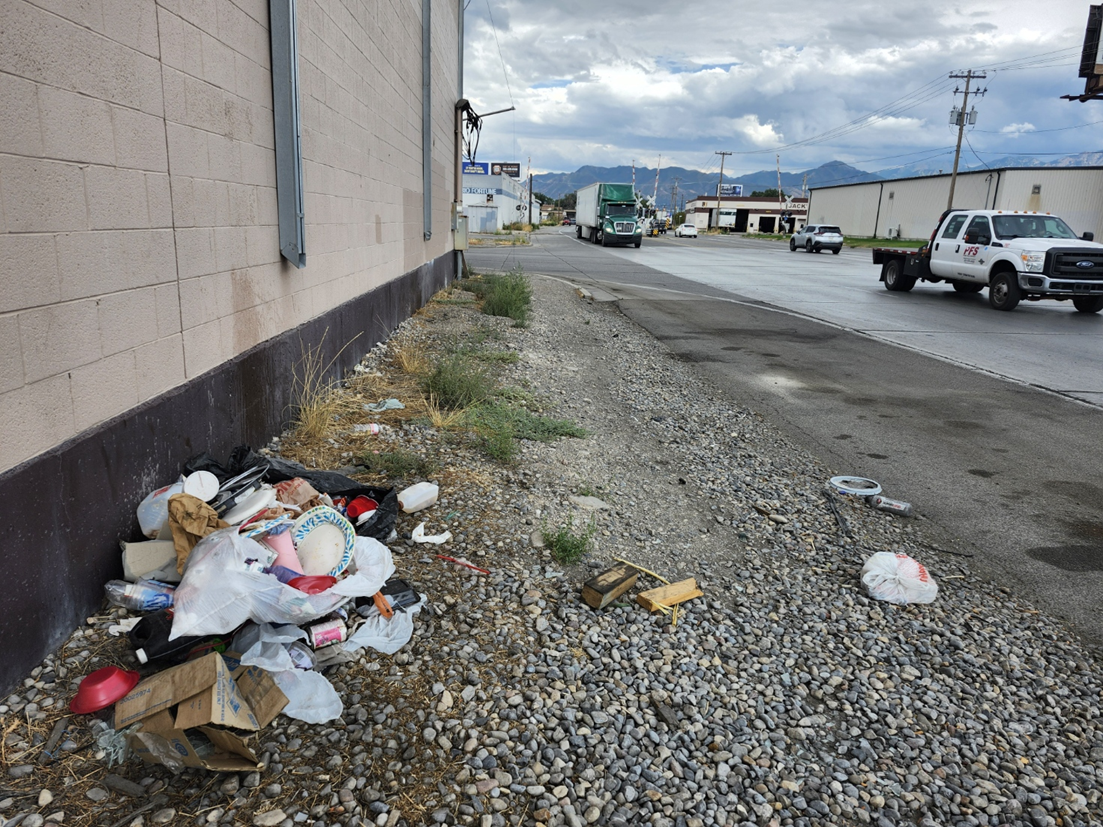
Piles of garbage line the edge of a business on California Avenue West of Redwood Road. JP Goates, Salt Lake City Public Services Deputy Director, said cleanup of residential areas are prioritized over that of industrial zones. Photo by Jacobo Rueda.
Salt Lake City’s Westside is largely residential from Interstate 15 to Redwood Road. But beyond that, the area shifts to industrial zoning, where people travel only if they work nearby or are passing through.
The change in land use coincides with a drop in environmental maintenance. Industrial corridors show recurring signs of trash buildup and illegal dumping, often left unaddressed until it is reported.
Last year — as reported by KSL — police arrested a 30-year-old man after investigators linked him to thousands of illegally-dumped tires across the Salt Lake Valley, including sites on Salt Lake City’s Westside. Today, signs of both illegal dumping and encampment-related debris are still visible.
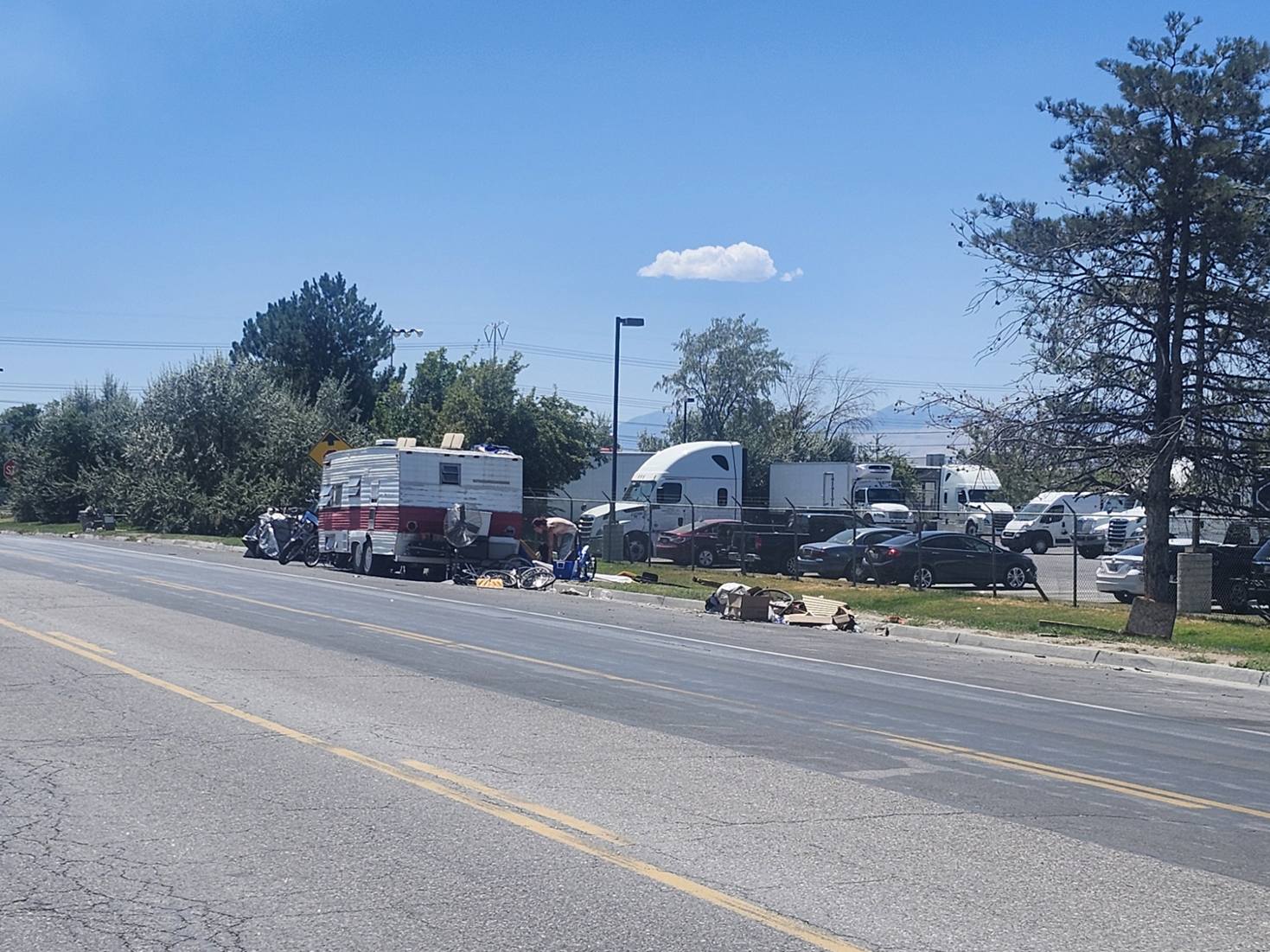
A man is camped in front of a business along Gladiola Street (3200 West) north of Directors Row (1000 West). Detective Eldon Oliver with SLCPD said there is a correlation between encampments like these and debris that is left behind. Photo by Jacobo Rueda.
RV and trailer encampments are regularly found along Gladiola Street (3200 West) near 900 South. According to Salt Lake City Police, a correlation exists between such encampments and debris that is left behind.
“That’s probably the hotspot, and that stays steady,” said Detective Eldon Oliver, the Salt Lake City Police Department’s community liaison for the Pioneer Precinct. Along with the debris, Oliver said police have seen an increase in crime in those areas in the form of break-ins and theft of parts for encampment residents to later sell.
“They will go and just find metal wire, and they'll sell it. So we've seen a little bit of an uptick in some of the property crimes that are out there,” he said. There have also been reports of catalytic converters being stolen from trucks, along with batteries, and tanks used in forklifts.
While police handle enforcement and initial contact with encampment residents, cleanup falls to city crews. The city clears the area of Gladiola Street every other week, according to Oliver, but the trash piles up again just as quickly.
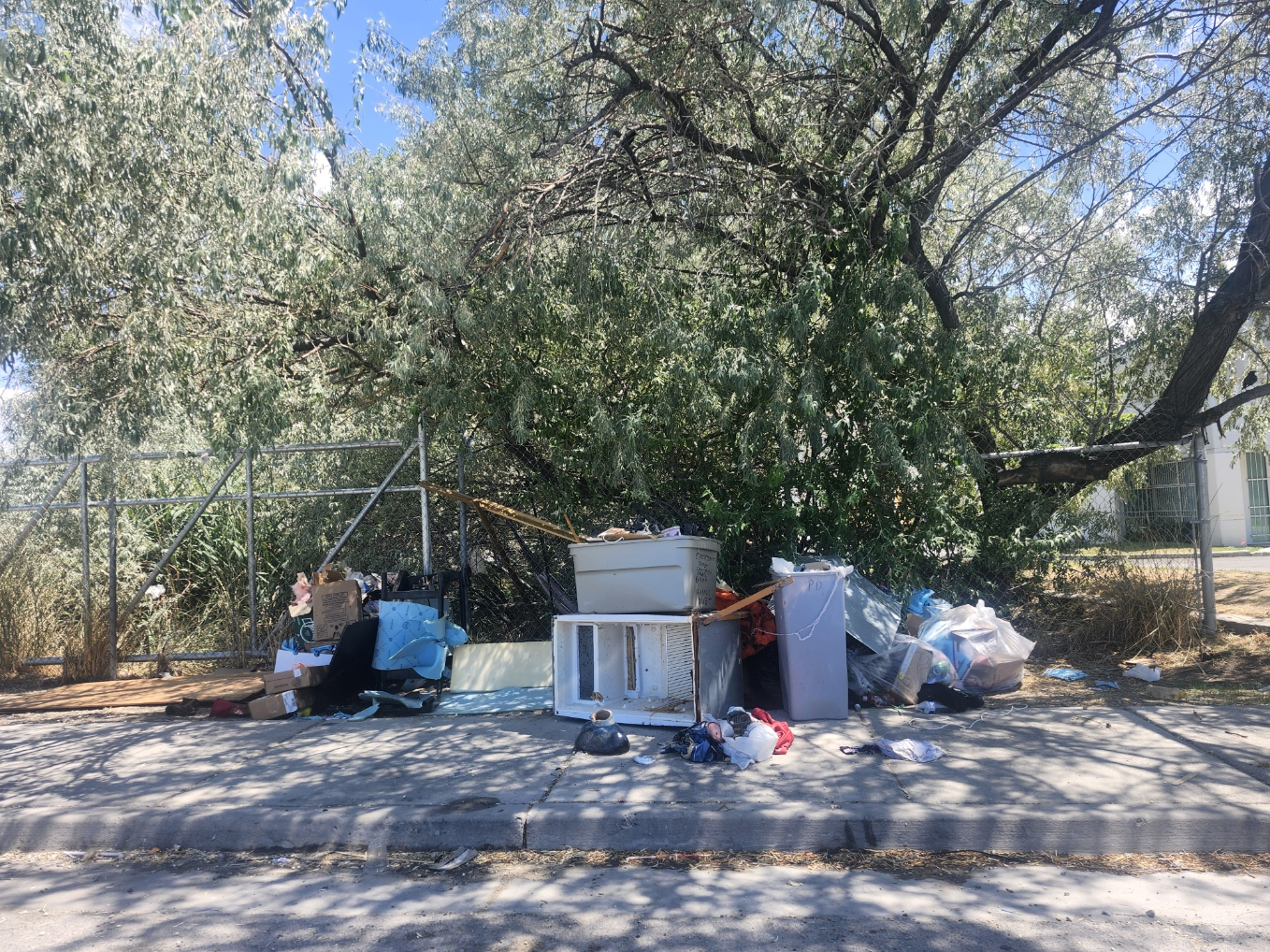
Discarded boxes and appliances lie under a tree on Gladiola Street (3200 West) north of Directors Row (1000 West). Debris is clumped in areas around the street. Photo by Jacobo Rueda.
Black garbage bags are scattered along the sidewalk on Gladiola Street amid cardboard, plastic, and other debris. Farther north, a camper trailer sits parked by the curb, surrounded by bicycles, boxes, and more bags. Nearby, an old refrigerator, broken trash containers, and other discarded items lie in a heap beneath a tree.
Gladiola Street is one of several industrial corridors where trash piles up near homeless encampments. Similar problems have occurred under the 700 South underpass at Bangerter Highway, near the Amazon Fulfillment Centers on 700 North, and near a newly-built Wendy’s on 5600 West and Amelia Earhart Drive.
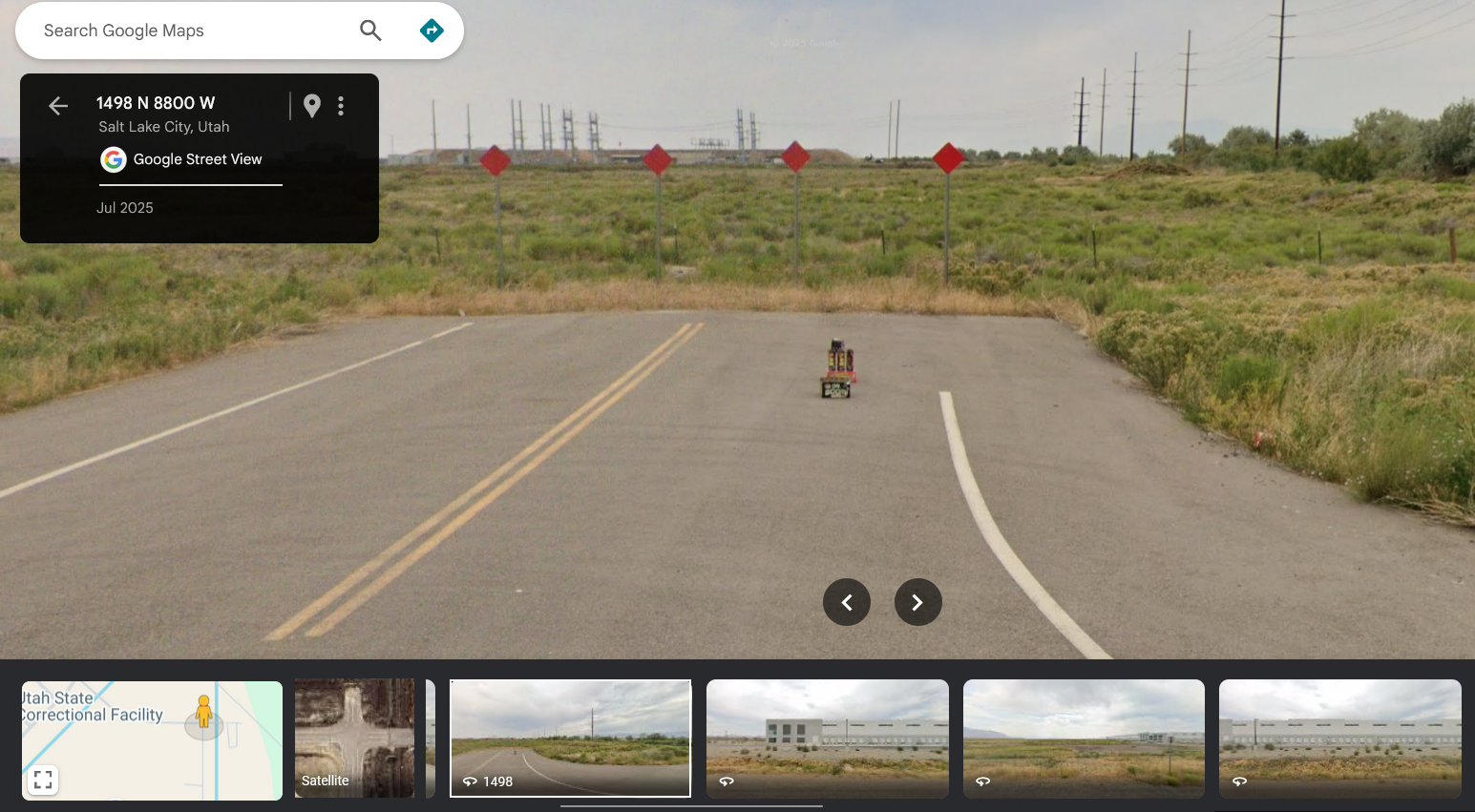
Google Maps Street View captured this image of discarded fireworks near the Utah Department of Corrections’ facility at 1480 North and 8800 West. The image is from July 2025. Photo courtesy of Google Maps.
While encampments in Salt Lake City’s industrial zones cluster in certain areas, trash and debris are still left behind in parts outside of those zones. At 8000 West and 1480 North, near the Utah Department of Corrections’ facility and well within city limits, people have left garbage behind.
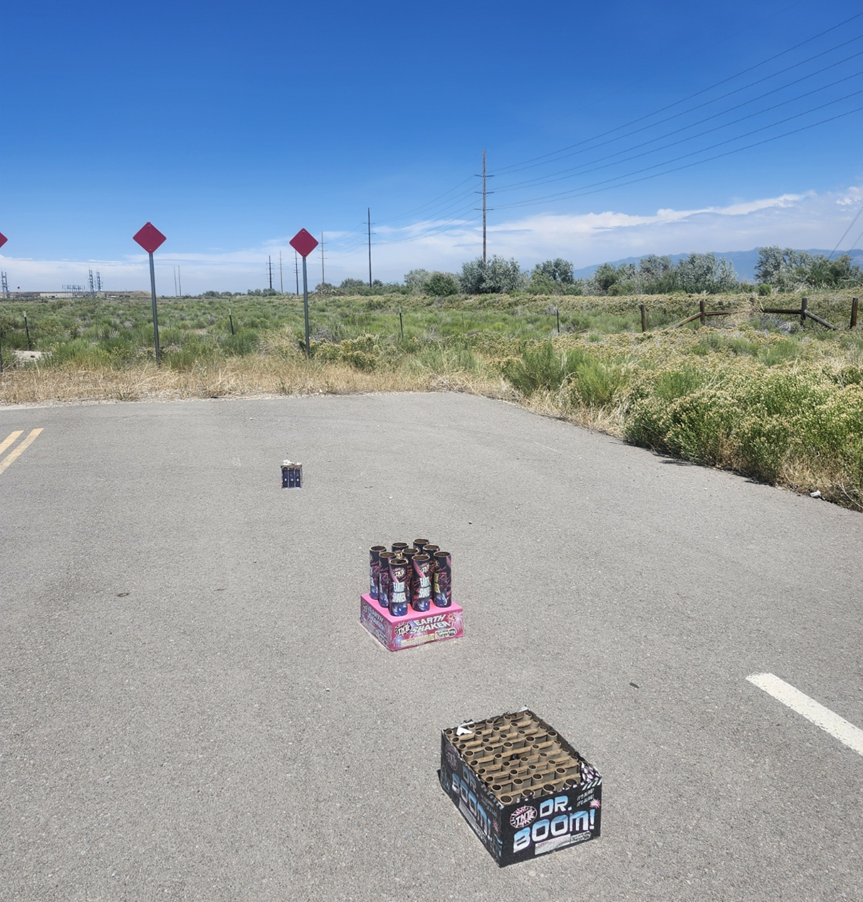
Discarded fireworks near the Utah Department of Corrections’ facility at 1480 North and 8800 West. This image was taken after the image from Google Maps Street View. Photo by Jacobo Rueda.
A Google Street View image from July 2025 shows discarded fireworks at the dead end of 8000 West — still sitting there weeks later in follow-up images.
According to a city official, Salt Lake City prioritizes cleanup in residential areas before industrial or uninhabited zones.
“If there's a chance [to clean up] in or around the parks, or if there's illegal dumping around the park or around an elementary school, we're gonna respond to that first,” said JP Goates, Salt Lake City Public Services Deputy Director. Areas like the International Center and its surroundings receive less attention unless the city is alerted to specific problem areas.
Another challenge is surveillance in industrial areas, which are active during business hours but see reduced traffic outside of that. Police, like cleanup crews, are dispatched based on need, and an industrial zone at 9 p.m. on Friday or Saturday might not always take priority.
“We only really patrol when we have available officers, and they're not tied up on another call,” Oliver said. “There are officers that are assigned to that area. Unfortunately, they are pulled to higher crime areas with calls for service and don't get a lot of time out in the industrial area right now, so it's not patrolled as much as we would like it to be.”
“There's five hundred and something miles of city roads out there,” said Goates. “That’s kind of like driving from here to the border of California… that we just simply aren't able to get eyes on.”
The city relies heavily on resident reports to identify dumping and encampment sites, according to Goates. Even when crews respond, certain materials — like dumped tires — require separate disposal trips. Goates said the landfill won’t accept tires unless they’re loaded cleanly, forcing crews to divert to a recycling facility. This in turn slows down other cleanups.
The effects of Salt Lake City’s cleanup priorities are also visible along California Avenue near Redwood Road. East of truck stops, tire repair shops, and warehouses, trash lines the roadside. Storm drains are damaged or blocked, and the Jordan River shows signs of pollution despite fencing meant to protect it.
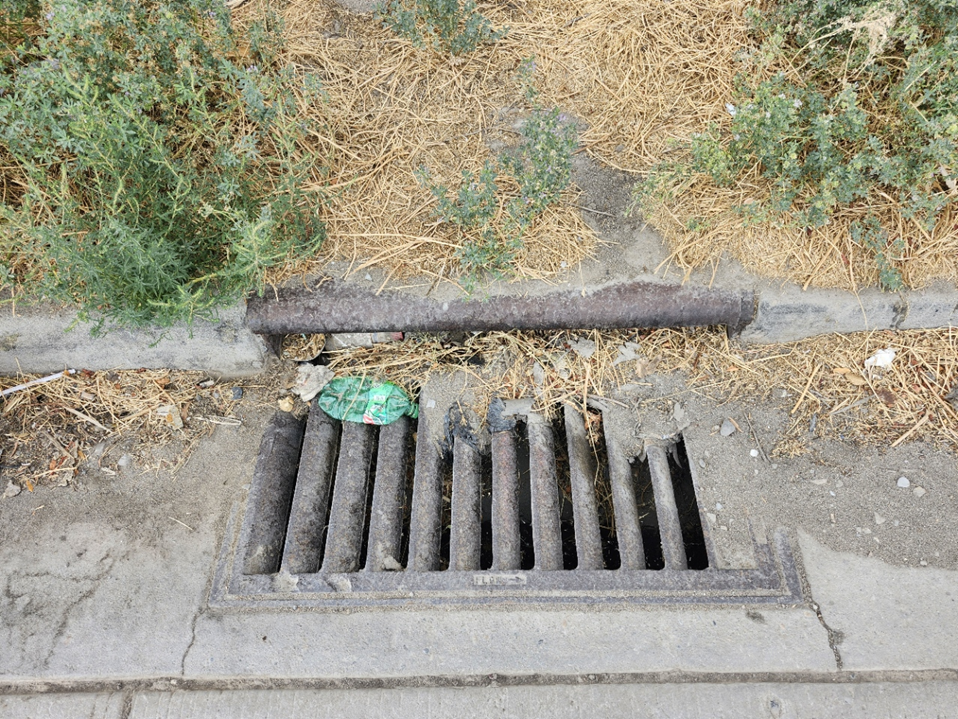
An eroded and partially clogged grill along California Avenue west of Redwood Road. Degraded water infrastructure is one reason why debris infiltrates into the nearby Jordan River. Photo by Jacobo Rueda.
The stormwater infrastructure here is visibly degraded, allowing runoff from clogged drains and scattered debris to bypass containment and flow directly into the river, an important waterway that flows into the Great Salt Lake. Oliver said despite their efforts, pollution along the Jordan river can be difficult to mitigate.
“There's so many organizations, state and federal, that work with the waterways that it's like a bureaucratic nightmare in order to get some of the things implemented on that river,” said Oliver. The Army Corp of Engineers, for one, oversees flood control and levee management along the Jordan River.
Other organizations involved in monitoring the river include Utah Division of Water Quality, Utah Department of Natural Resources, and Salt Lake County Public Works. Even so, Oliver said the smaller debris that eventually gets in (plastic bags, potato chip bags, candy wrappers, etc.) is there due to carelessness on the public’s part.
“[These organizations] have just a bunch of different things along the river to work with, but some of the small stuff… it's, unfortunately, just due to us being not really careful or not caring,” he said.
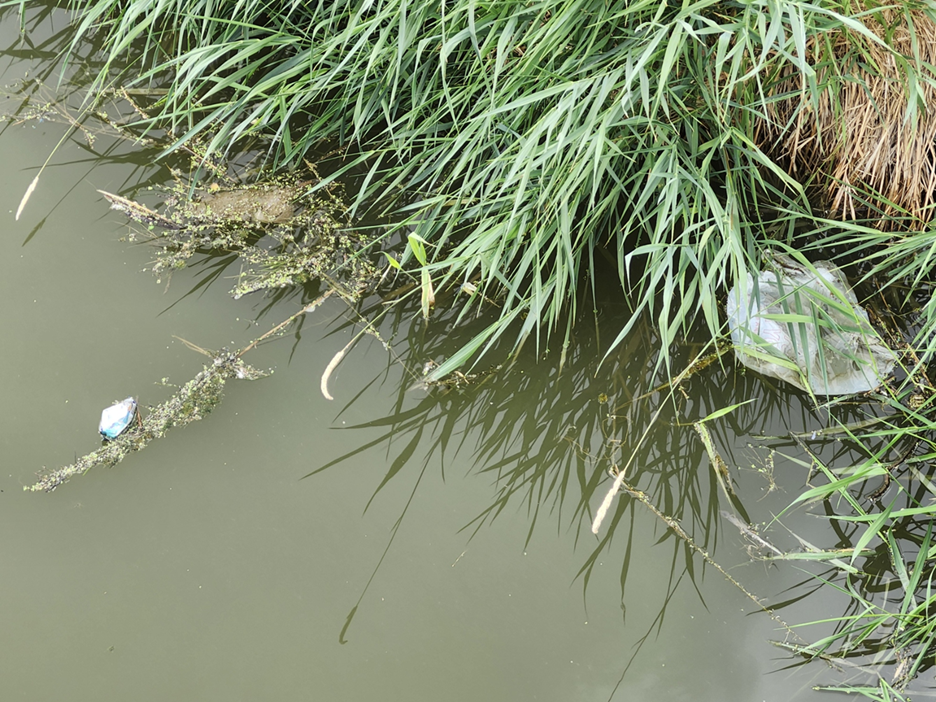
Aluminum and plastic bags float along the Jordan River near the intersection of California Avenue and Redwood Road. SLCPD Detective Eldon Oliver said governmental bureaucracy and human carelessness contribute to waste continuing to infiltrate the river. Photo by Jacobo Rueda.
Goates said overseeing industrial areas like the International Center and the area around California Avenue and Redwood Road requires manpower the city doesn’t have. Their proximity away from residential areas re-emphasizes the city's priorities in clearing trash from neighborhoods first.
“I don't want to say [industrial areas are] not important,” he said, “just that we need to balance our resources with what we can do.” Despite that, steps are being taken to mitigate the blight of trash heaps throughout industrial areas.
With limited resources to proactively monitor industrial zones, Goates and Oliver said the MySLC app remains the most effective tool for reporting illegal dumping and other public concerns. It is available to the public and can be used to report anything from potholes to encampments throughout the city.
Once installed on a mobile device, users create an account and can search by keyword or browse the service library to find the appropriate form to fill out. Some requests prompt for an address or photo. When the form is completed, the case is automatically submitted to the city.
After the city receives a work order, a crew is sent out to clean up or repair the affected area. When it is complete, users receive an email notifying them that the request has been fulfilled. Goates said using the MySLC app leads to quicker response times.
In July, Salt Lake City launched the Clean City team. According to the city’s website, the goal is to “address conditions that can lead to crime, like graffiti, abandoned property, trash, poor lighting, and neglected public spaces.” The initiative was part of a $512 million dollar budget allocation intended to address public safety and infrastructure issues.
The Clean City Team includes an RV mitigation unit, according to Goates. They, alongside the Rapid Intervention Team (RIT), are tasked with clearing debris using a mini skid steer and dump-bed trailer. In the case RVs or campers are occupied, the city coordinates with social services before taking further action.
Along with the city, some business owners are also getting involved in cleanup efforts.
“There's a couple of good groups that contact me regularly about some of the issues that they're having out there and we try and get on top of it as quickly as they contact me,” said Oliver. However, Oliver says there are some property owners who — in his words — don’t care and instead allow garbage to pile up.
“That's a really difficult one for us because it's private [property],” he said. “So we can't initially go out and do proactive work… until we get the okay from the property owner.”
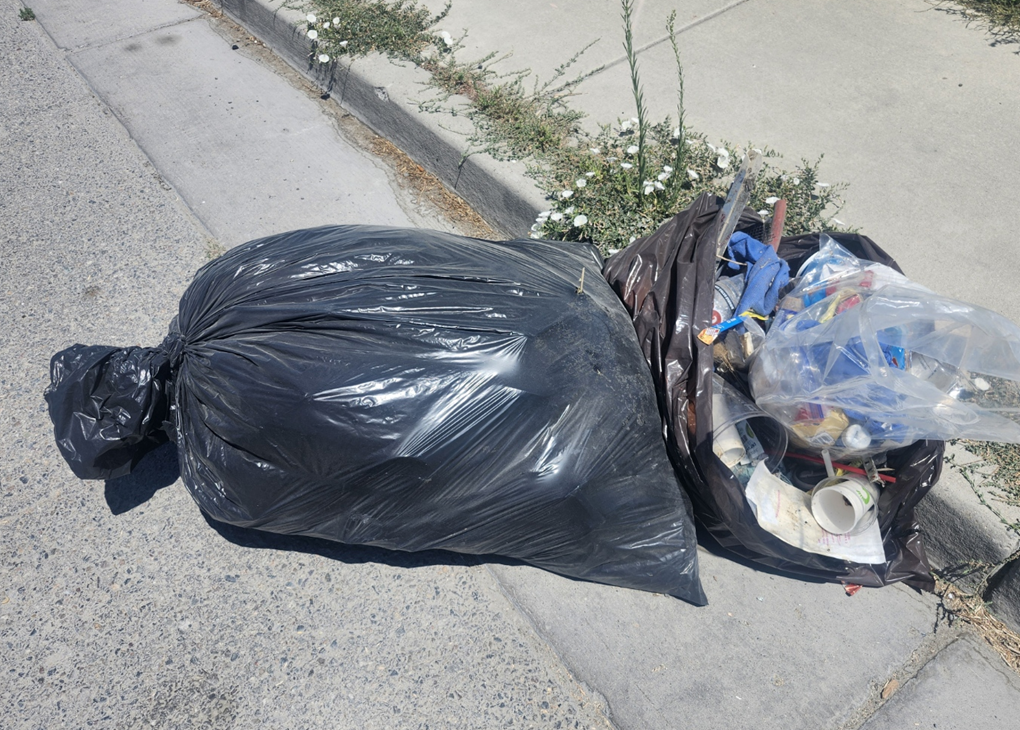
Bags of garbage lay strewn along Gladiola Street (3200 West) north of Directors Row (1000 West). Photo by Jacobo Rueda.
As the city addresses trash and safety concerns, it also follows a structured process for handling vehicle-based encampments.
Police first contact the owner and request them to pack up and leave, according to Oliver. If the owner does not comply, a compliance officer issues a 48-hour notice, which is posted on the vehicle. If the RV is inoperable, unregistered, or uninsured, it can be seized immediately.
If the RV is registered, the owner must move it within 48 hours. Failure to do so could result in the vehicle being impounded, requiring the owner to pay fees to retrieve it. After enforcement or if an RV or camper is abandoned, the RIT steps in to remove what’s left.
Salt Lake City’s northwest industrial corridor continues to grow, especially with the expansion of the Inland Port. City officials say they may need to reassess their approach to cleanup prioritization. Oliver said there’s been growing interest in seeing those areas maintained more consistently.
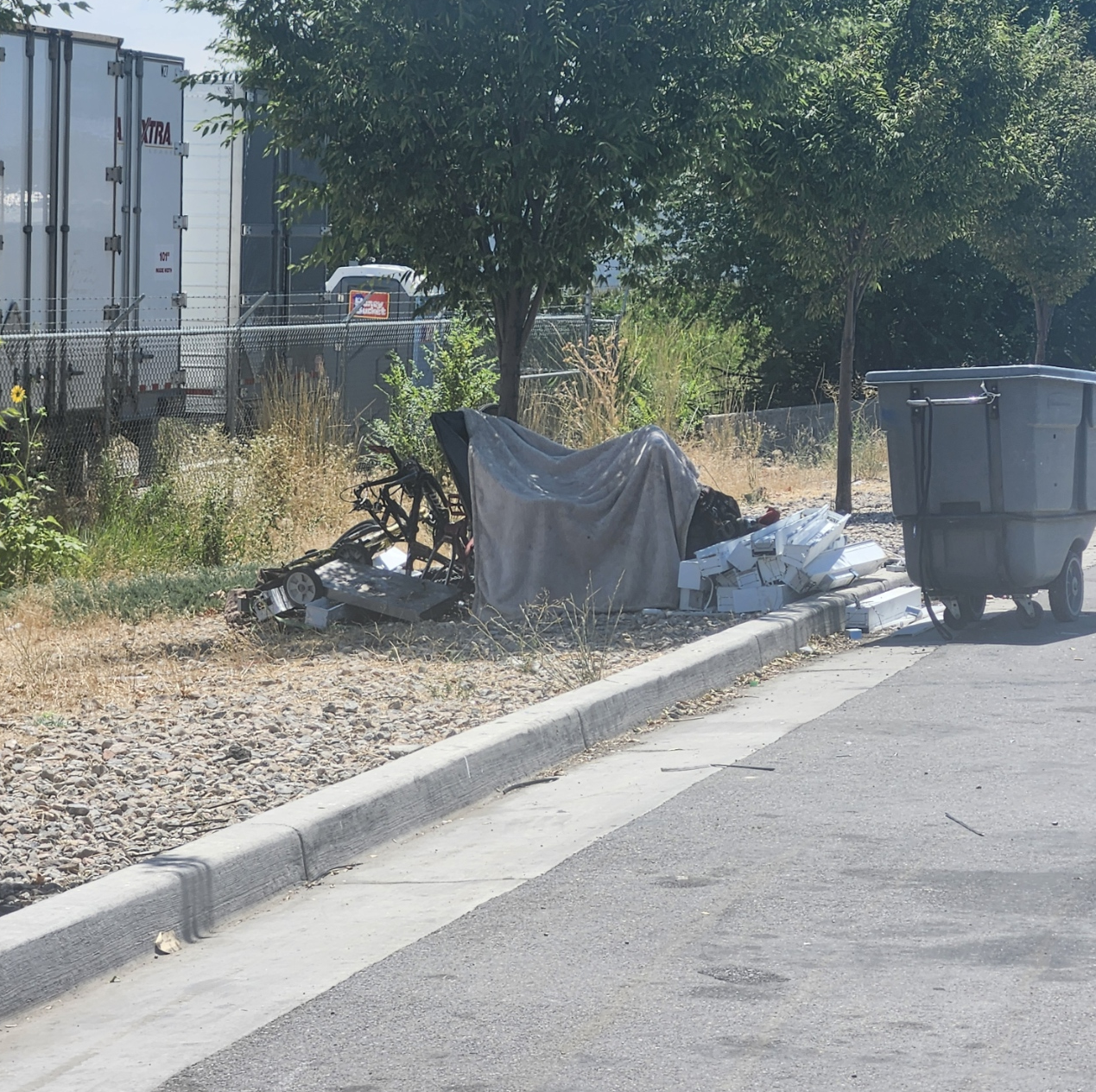
Abandoned carriages draped with an old blanket lie next to other refuse under a tree. Such blight is a common sight along Gladiola Street (3200 West) north of Directors Row (1000 South). Photo by Jacobo Rueda.
“There's a lot of good people [who] want to see a lot of change and want to help us out in the industrial area,” he said. “And it's only going to grow more with the state of the Inland Port. So yeah, it's good to have these resources. And [it’s] good to have people that know what's available and how to solve some of those issues.”
Still, Oliver said he recommends people continue to reach out to police and report any suspicious activity or problems. Despite people expressing frustration when visible issues persist — even after filing complaints — he said those areas remain on the department’s radar, and they’re still taking action.
“We work off of a citywide hot map,” he said, “so if we get a lot of complaints in an area, a lot of crime that starts to occur in an area, that's where we put our limited resources.”
For non-emergencies, contact Salt Lake City Police at (801) 799-3000. In an emergency, dial 9-1-1. To report trash, encampments, or other public health and safety issues, use the free MySLC app to submit a report. The app is available for Apple and Android devices.