
Caring for the trees: Pitching in to save our urban forest
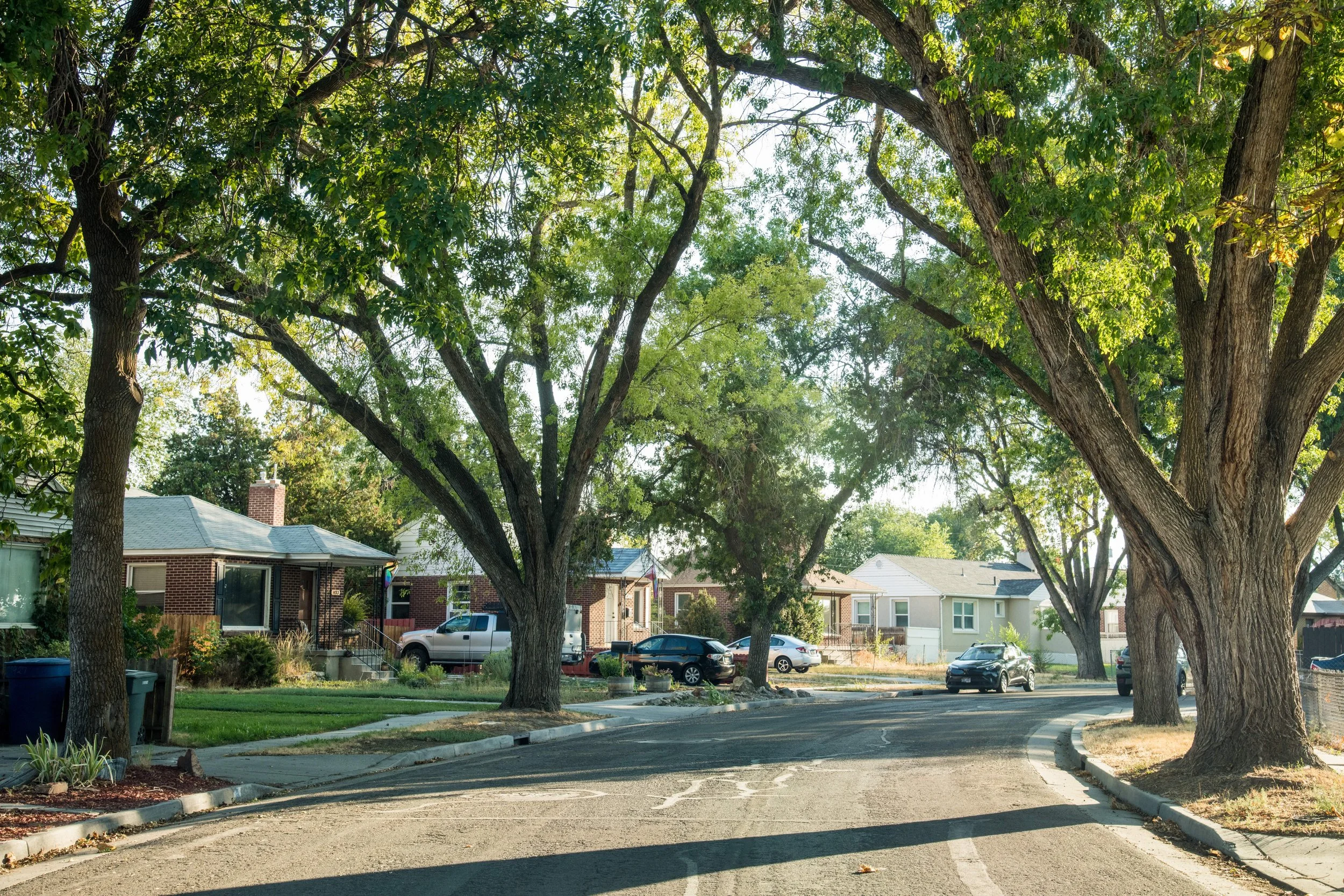
Street trees are a shared public asset that the city’s Urban Forestry Department will plant and prune at no cost, but they need residential help to provide the essential water. Photo by David Ricketts.
Urban trees offer vital benefits to our community, such as conserving energy by cooling buildings and streets with shade, providing animal habitats, and filtering the air. However, in Salt Lake City's arid climate, trees don't thrive naturally. This creates a dilemma: keeping our urban forest healthy requires property owners to irrigate, which often feels contradictory to our necessary efforts to conserve water by cutting back on yard watering.
Most of Salt Lake City’s residential trees live in park strips between the road and sidewalks, and most water conservation incentive programs target these particular areas for lawn removal and irrigation reduction. While most water-wise programs — like the popular Flip-Your-Strip campaigns — encourage replacing lawn with native plants (which still require irrigating, but to a lesser extent), many residents opt for gravel or rock to fill in these spaces and cut out watering entirely. Rock landscapes, also known as hardscapes, can increase soil temperatures and stress out established trees. Evidence of tree stress can appear as yellowing leaves in the first year, followed by significant dieback in the upper crown of the tree, and eventually death.
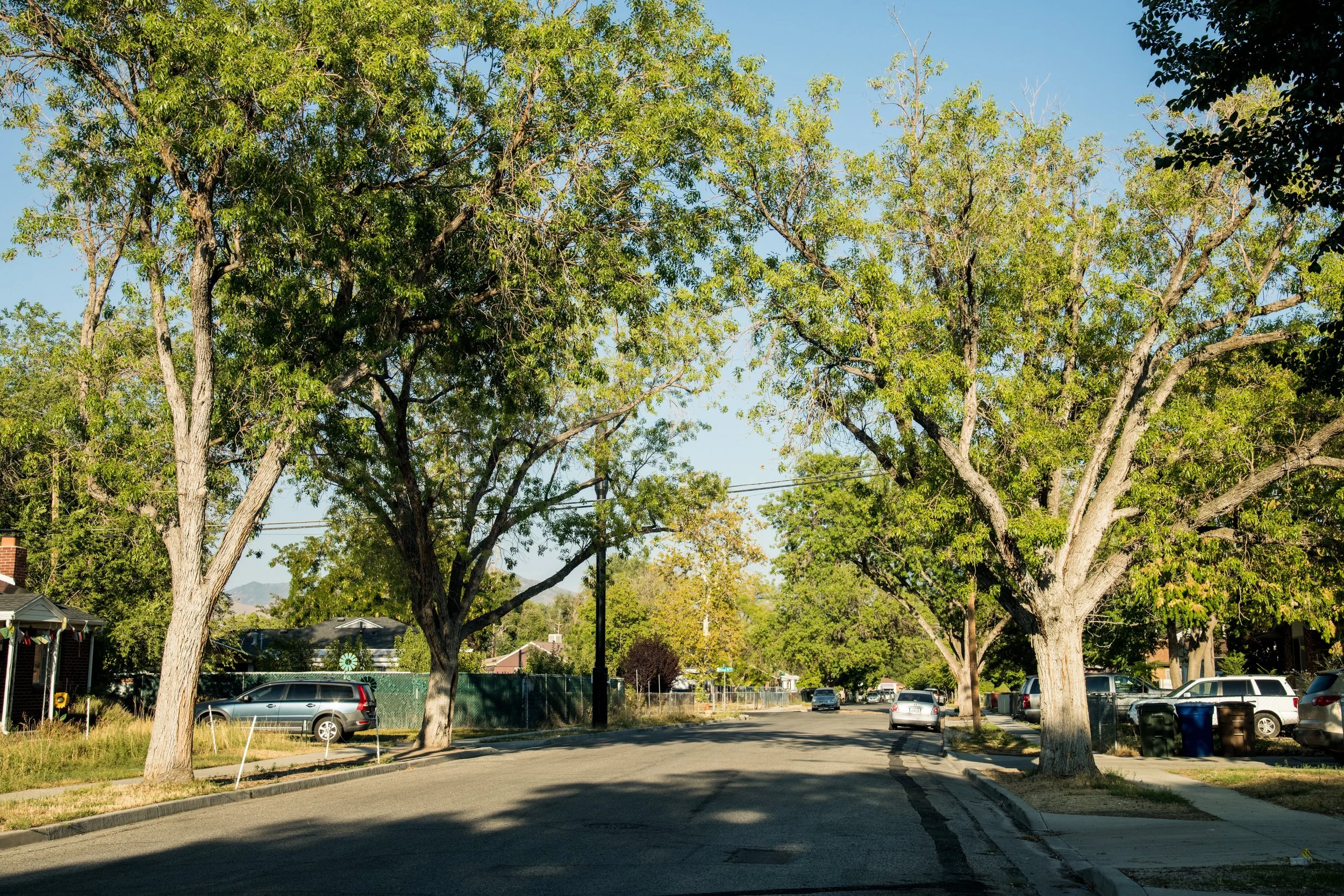
Caring for the trees and saving water don’t have to be at odds with each other — they can work together in harmony, providing essential benefits for those willing to donate time and resources to protecting the trees. Photo by David Ricketts.
Two years ago, Salt Lake City launched the ‘Keep Your Cool’ campaign to remind community members that if we want to continue reaping the benefits of tree-lined streets and parks, we need to water more strategically; but we can’t cut off water entirely.
According to Tony Gliot, Salt Lake City Urban Forestry Division Director, reducing water and supporting the urban forest do not have to be at odds — they can work together in harmony. “Both water and trees are precious natural resources. If property owners invest in a street tree with their water, they get back what they invest,” Gliot explained. “Trees are efficient users of water — their cooling effect acts like nature's swamp cooler, cooling our environment by almost 20 degrees. They slow the evaporation of water we use elsewhere in our landscape, and the water gets recycled back into the atmosphere.”
Gliot described the street trees that make up our urban forest as a partnership between residents and the city. The trees are a shared public asset that the city’s Urban Forestry Department takes responsibility for to help to prune and plant at no cost, but they need residential help to provide the essential water. Gliot said the donation of water to the trees is a great way to give back to your community. “Trees promote being outside and make our space more comfortable to walk and play, making us healthier. They can also make our neighborhoods more relaxing places by reducing street noise and buffering the wind.”
Margaret Holloway, a Rose Park Resident, walks her neighborhood streets often, citing the shady walking paths as one of her favorite things about where she lives. But she’s worried for the future of the neighborhood trees if people don’t keep up on watering. Holloway says it doesn’t take as much water as people think to keep a tree healthy. “Your street tree needs a shower-worth of water a month,” said Holloway. “The right tree in the right spot provides so many benefits with just a bit of water.”
Salt Lake City’s Urban Forestry Department officially recommends giving trees 5-10 gallons of water per inch of trunk. Newly-planted trees require the most consistent watering while they establish themselves — roughly 10-20 gallons per watering. Urban Forestry says in these cases, residents should water evenly at a low flat rate until the soil is thoroughly soaked.
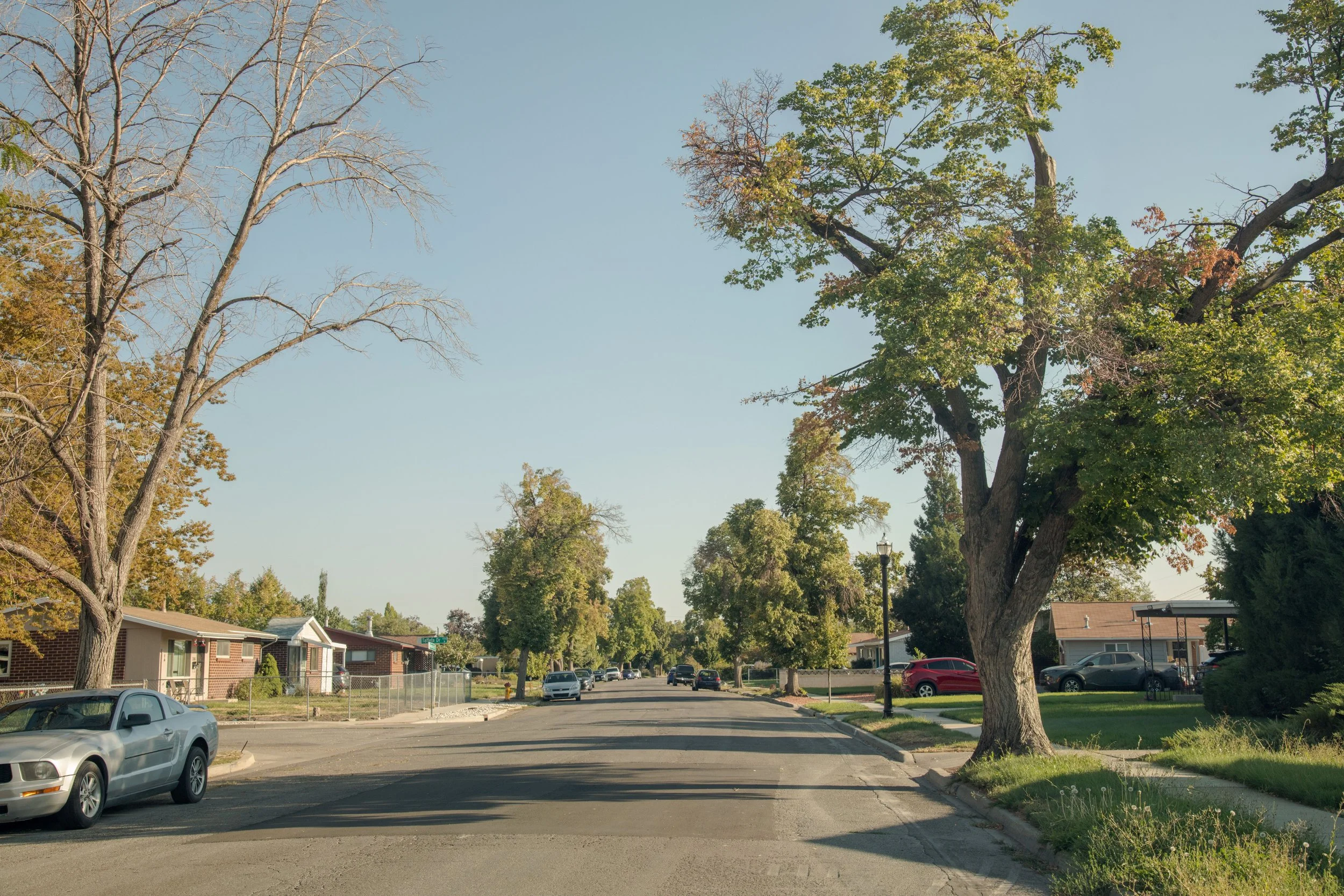
Symptoms of tree stress can include yellowing leaves in the first year, followed by significant dieback in the upper crown of the tree, and eventually death. In situations where it does die, the city will come and remove the tree. Photo by David Ricketts.
Holloway suggested naming your trees as a fun way to connect with them and as a way to remember to care for them regularly to keep them thriving. “Don't forget to name your tree. They have feelings,” she explained. “I have Annabelle: a gambel oak grown from an acorn. [I also have] Rosalie, a linden, and four aspens: Eenie, Meenie, Miney and Moe.”
Gliot shared a similar sentiment, saying, “Do what you can to personally connect with your landscape, it can help you realize how much these plants rely on you for care.”
If you would like information on acquiring a free tree for your park-strip, or have questions about caring for an existing tree, Salt Lake City’s Urban Forestry Department is available to answer questions and provide resources. The department can be reached at 801-972-7818 or by email at urban.forestry@slc.gov.