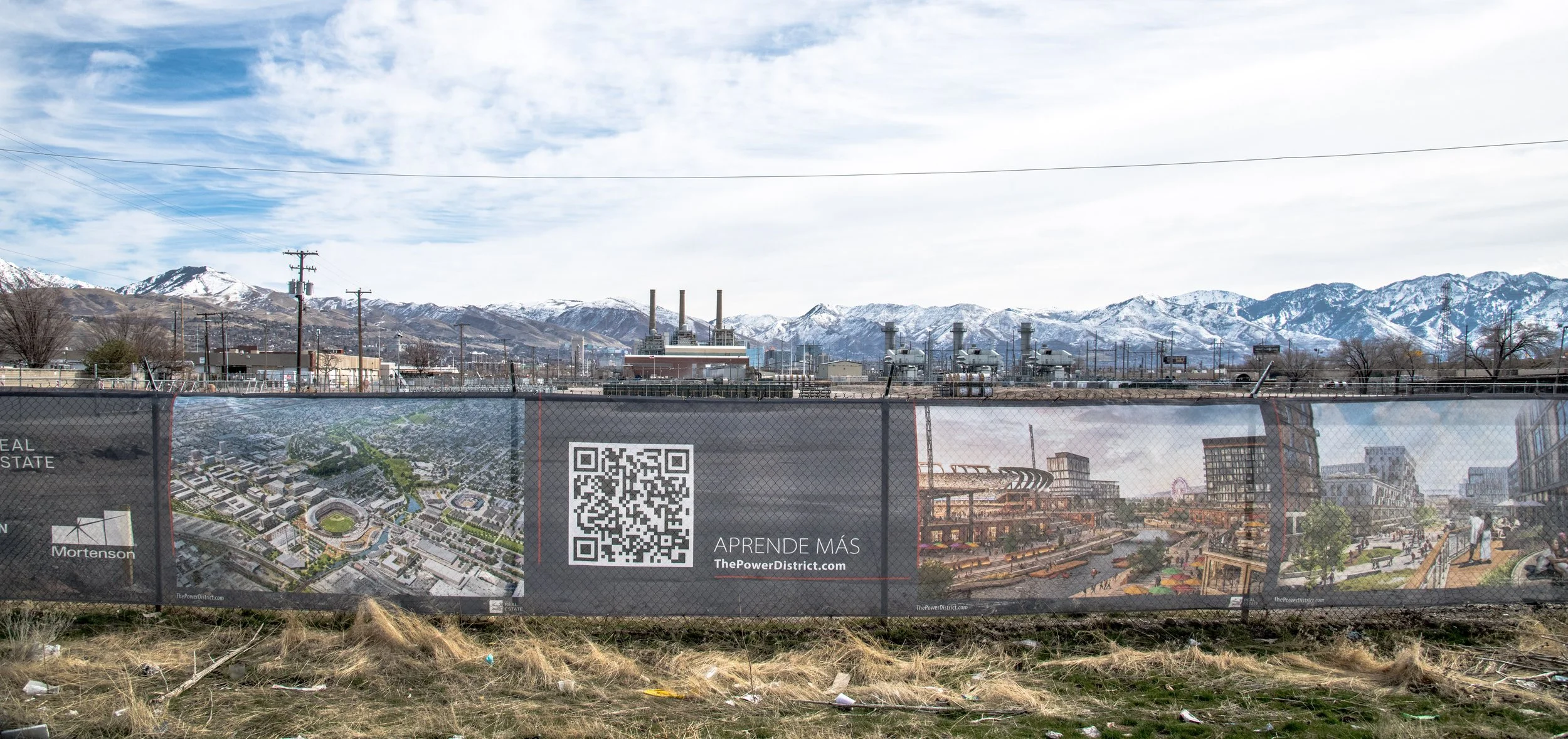
Construction is already underway in the recently-created Jordan River Fairpark Zoning District. The mixed development area, also known as the Power District, will feature a 30,000 seat stadium. Photo by David Ricketts.
As developments in the Fairpark area go forward, only one major league sports stadium will be built after all.
During the 2025 Legislative General Session, lawmakers discussed a proposal that would allow for multiple stadiums in the officially-designated Jordan River Fairpark Zoning District, more commonly known as the Power District. Senate Bill 336 would have permitted several smaller stadiums to be built, each with seating capacity of 18,000.
The proposal ultimately failed in the final days of the session, and only one larger 30,000-seat stadium is set to be built in the developing Power District, located along the south side of North Temple from the Utah Fairpark to Redwood Road.
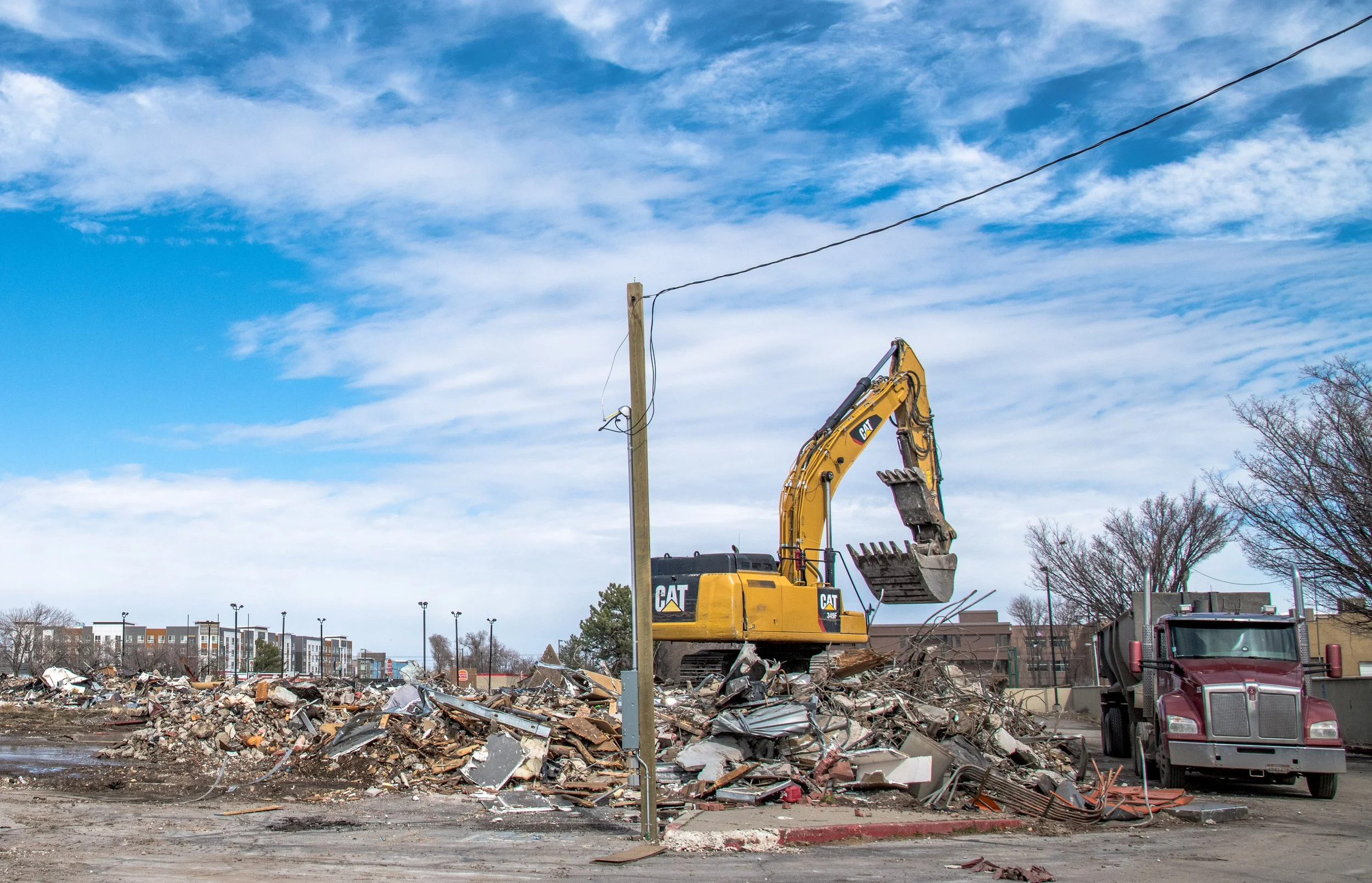
The area near Redwood Road and North Temple is undergoing a major transformation over the next several years, including the demolition of a former motel. Photo by David Ricketts.
State Senator Scott Sandall (R-Tremonton) chairs the Utah Fairpark Area Investment and Restoration District’s Board and also sponsored SB336. “As we got further into the master plan across the stadium, (and) Fairpark, it was just pretty much determined that the best use of the area would be just one individual stadium, as far as when we planned it out,” Sandall told Utah News Dispatch’s Alixel Cabrera. “So we figured there was no reason in the bill file to leave the option hanging out there.”
SB336 also cleaned up some language regarding how the sales tax levied by the city can be used in the development, specifying where the funds would come from and the specific types of development and improvements that can be done using those tax dollars.
Salt Lake City approved new zoning district
In December, the Salt Lake City Council created the Jordan River Fairpark Zoning District along North Temple. This action allows the Power District development to move forward. In partnership with the Larry H. Miller Company and the State of Utah, the creation of the zoning district also guarantees that city services like water, power, and sewer will be available within the area.
The zoning district’s creation came about due to 2024 House Bill 562, which established the Utah Fairpark Area Investment and Restoration District (UFAIR). As part of that bill, the LHM Company had to come to an agreement with Salt Lake City over how the area would be developed.
Through the new agreement, buildings in the Power District can be built up to 400 feet tall. However, buildings over 200 feet will be required to undergo a design review. The district doesn’t have to follow several planning policies used throughout Salt Lake City though; there are no minimum lot sizes, widths, or setbacks. Any developments within this zone also do not have to follow the city’s general plans, though the district will be required to have dedicated open space.
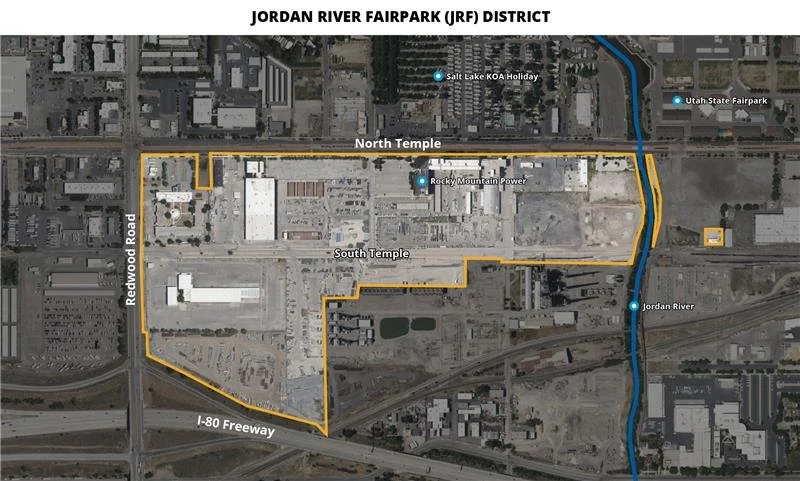
In December, the Salt Lake City Council officially created the Jordan River Fairpark Zoning District. Boundaries for the zoning district are shown in this map. Map courtesy of Salt Lake City.
UFAIR appoints new executive director to oversee development
The ongoing developments in the Utah Fairpark Area Investment and Restoration District are being overseen by a new executive director. In October, Benjamin Buys took on the role, bringing years of government and development expertise to the district.
Most recently, Buys was the deputy executive director of the Utah Inland Port Authority.
Upon announcing his appointment, UFAIR Board Chair State Senator Scott Sandall said he was enthusiastic to have Buys on board. "We are thrilled to have Benn join the UFAIR team," said Sandall. "His experience and skills make him the ideal person to lead our efforts in restoring and enhancing the Fairpark area. We look forward to his vision shaping the future growth of the district."
