
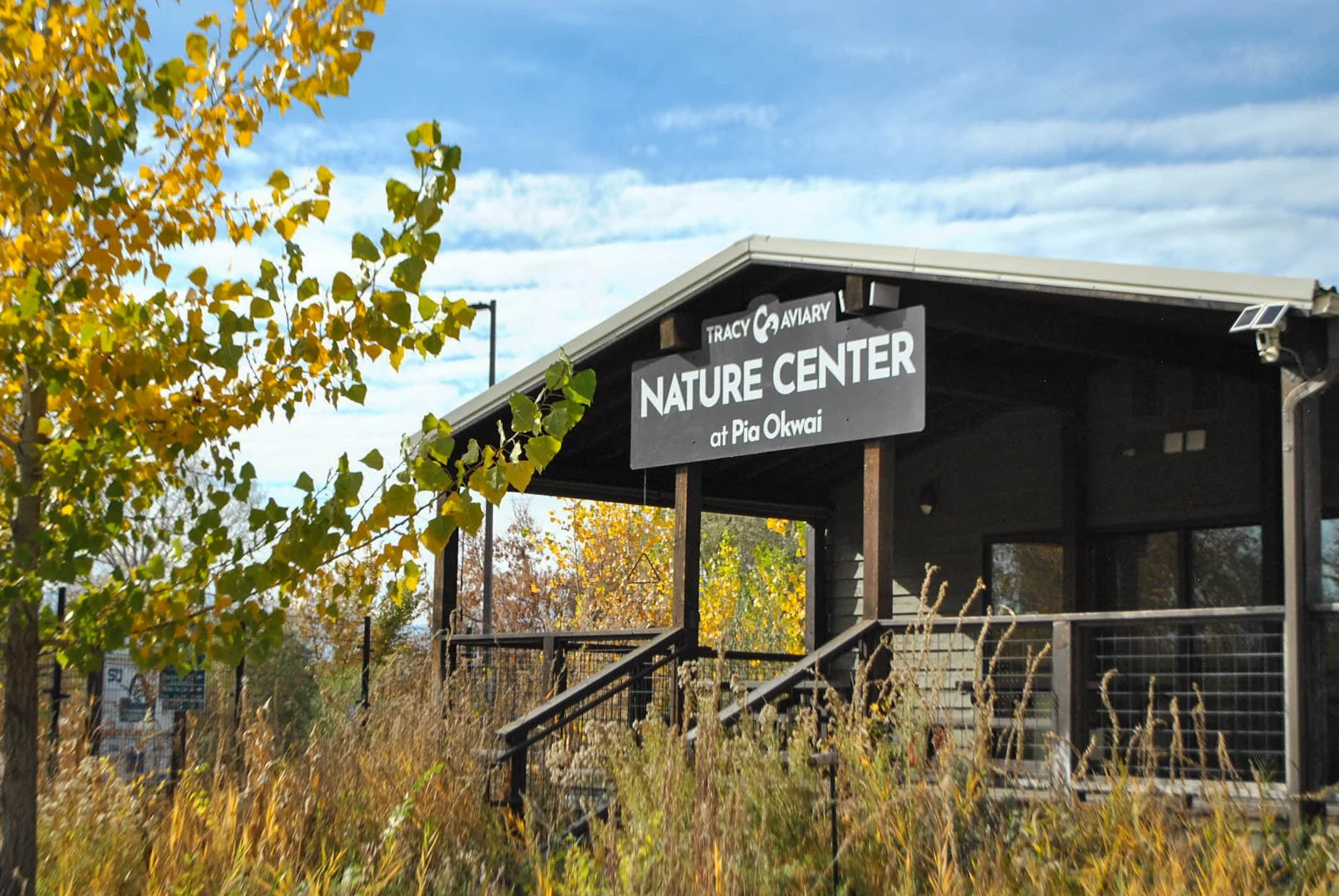
At the Tracy Aviary’s Nature Center at Pio Okwai, visitors get the chance to see birds, plants, and other wildlife along the Jordan River. The center now hosts a bilingual bird walk in the hopes of broadening its reach to the Spanish-speaking community. Photo courtesy of Tracy Aviary.
On a gray Saturday in September, Jess John led a group of seven people along the shores of the Jordan River looking for birds. As she used a laser pointer to direct the group’s attention to various birds and noted their calls, Estrella Segovia repeated the information in Spanish.
Tracy Aviary’s Pai Okwai Nature Center, 3310 S. 1000 W. in South Salt Lake, hosted the bilingual bird walk during Latino Conservation Week, a first step in its effort to reach out to residents in western Salt Lake County. The nature center is currently working on translating into Spanish descriptions for its exhibits and posters detailing common birds in the area, as well as including indigenous names of wildlife on labels. In fact, the nature center adopted the indigenous name for the Jordan River, Pai Okwai.
“Having the indigenous names be highlighted and prioritized, I think, is very important to recognizing just how long these bird species have been here,” said John, the tour leader. “That they've been here significantly longer than most of us have alongside our indigenous communities.”
The bilingual bird-watching tours launched a few years ago as a pilot program and have continued annually, said John, a conservation outreach ecologist.
Segovia, the nature center’s facilities manager who also interpreted the walk, said they are reaching out to their neighbors.
“We just want to create a space where we're welcoming to our Spanish-speaking community,” she said.
John underscored the importance of the interpretation.
“We live in a very English-dominant society, and so a lot of our conservation education programs, even in Tracy Aviary, are primarily English,” John said. “So I think seeing that expand to broader groups has been really exciting.”
The walk featured the green oasis created along the Jordan River at Pai Okwai, a rare spot of nature on the west side of the freeway.
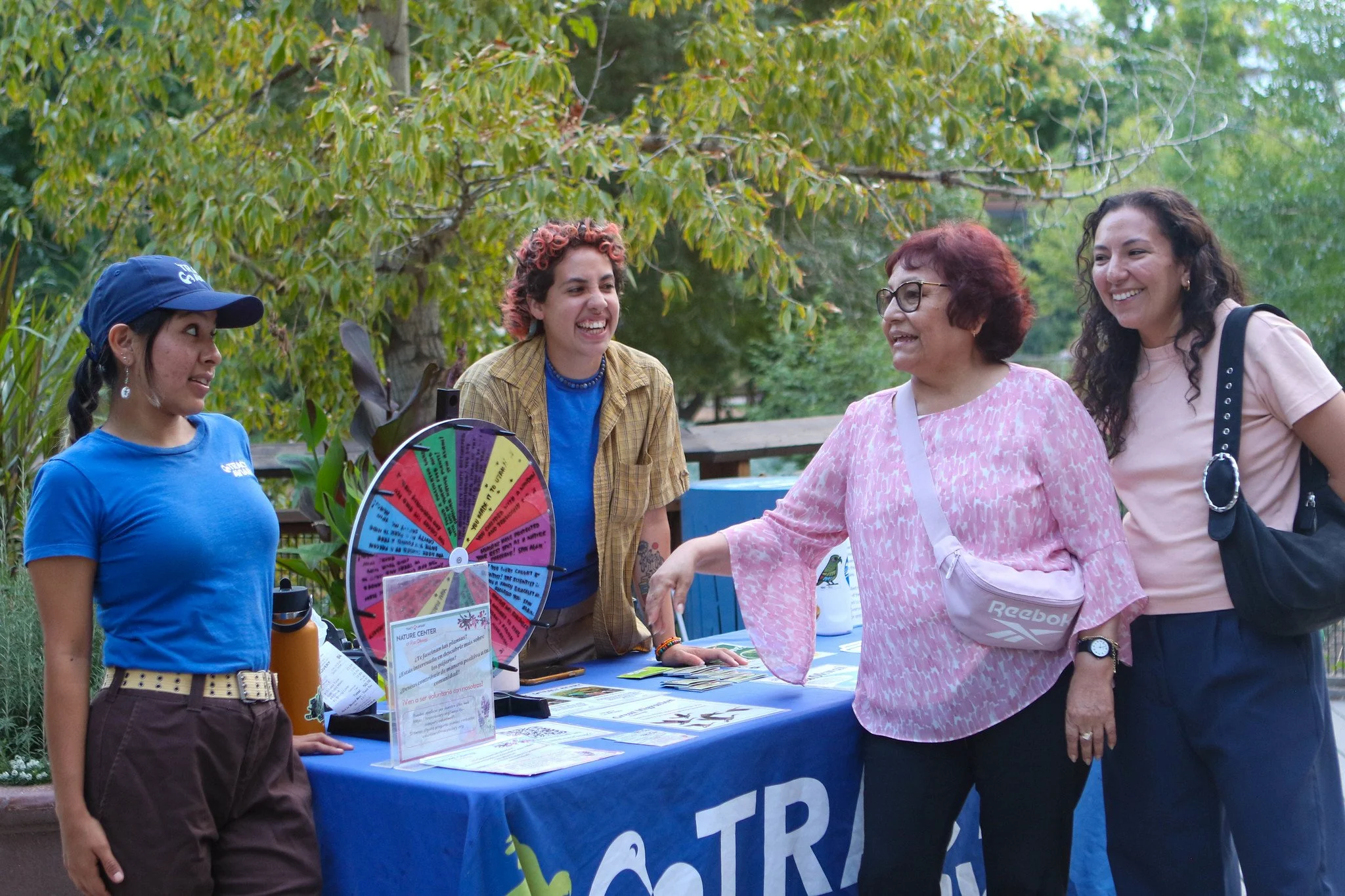
One of the goals of the Tracy Aviary’s Nature Center at Pio Okwai is to make learning about nature more accessible to those living in the western part of Salt Lake County. Photo courtesy of Tracy Aviary.
The walk was led by John, who informed attendees about the birds they were seeing, and a second guide to point out the plants along the way.
The two guides spoke about how the walk aims to educate people about the accessibility of nature on the Westside of Salt Lake City.
“I just hope that people take away how accessible it really can be, and [this] encourages people to go seek out other opportunities in nature as well,” said Segovia, who translated for both guides.
John added, “Having such a community-centric space that has brought so many amazing groups together to create such a green space west of the freeway has been awesome.”
Though many people may imagine bird watching to be a lot of waiting around, the guided bird walk was full of wildlife. It was even more visible through the binoculars the aviary provided.
John pointed out multiple species of hummingbirds, as well as starlings and woodpeckers, among others. With every point of her laser, the group whispered to one another excitedly, before a hush fell over them to listen to the birds’ calls.
She taught the group which calls belonged to the individual species, where they originated, and their unique behaviors.
She labeled one area, a kind of conversation pit made out of grassy mounds, as a hummingbird warzone. In this area, the small birds zipped around, attempting to claim the territory from one another.
The trail along the river was home to an unusually large number of Cooper’s hawks, which scoped out the area from dilapidated fence posts. They were the result of nesting Tracy Aviary’s ecologists had documented some months ago. John said the young hawks were most likely learning how to hunt.
While she described the activity, attendees were showered in dove feathers that spiraled to the ground as a hawk just missed nabbing a meal.
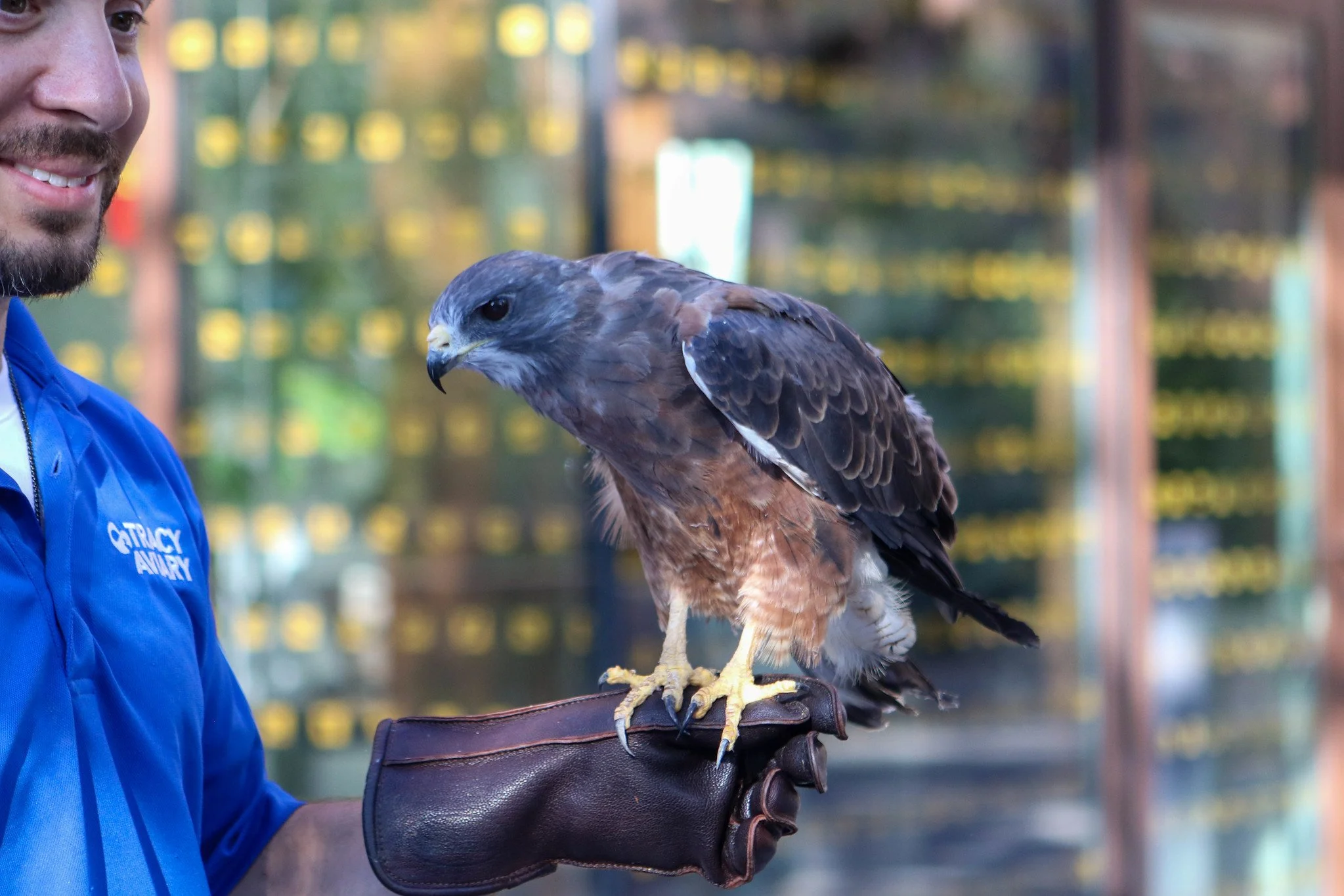
Though many people may imagine bird watching to be a lot of waiting around, the guided bird walk was full of wildlife. Photo courtesy of Tracy Aviary.
In between spotting birds, the plant expert pointed out different species along the way. She explained that many of them were invasive, detailing how they arrived in Utah and how they interacted with the natural environment.
She invited the group to smell and touch plants.
She pointed out a tree called a Russian Olive, an invasive species brought to Utah to stabilize the river banks. With a willowy look and sage teardrop-shaped leaves, the tree produces small fruit that looks like a tiny white olive.
The guide pulled one off the tree and invited walkers to taste it. With the first bite, the flesh dissolved into a mildly sweet sand around a small pit.
John said she hopes to expand experiences like these for people west of Interstate 15.
“I hope that we can continue to be a little bit of a bridge into nature for some of our folks,” she said.