
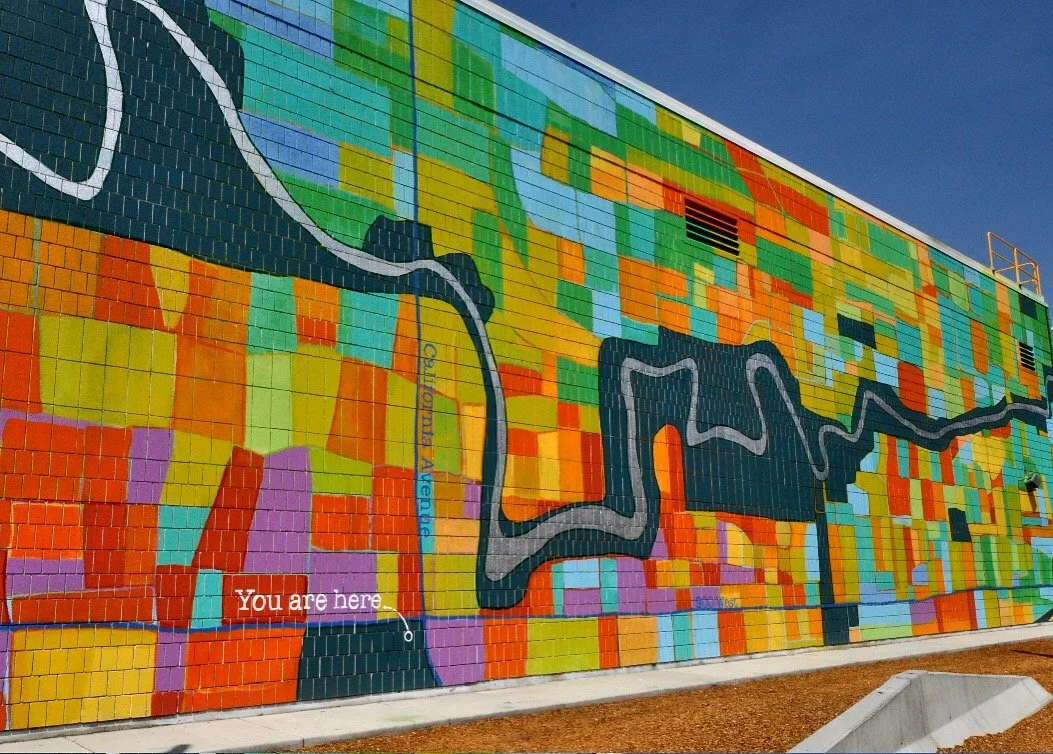
“You are Here” (Glendale) – Located at the Sorenson Multi-Cultural Center, this mural highlights the shape of the Westside’s open space along the Jordan River, surrounded by a quilt of diversity. Designed and installed by Chris Peterson. Photo courtesy of Chris Peterson.
Art is powerful. It can transform how a place looks and feels, but it can also transform our own personal emotions. Wall art — murals — hold this type of power in the place we live in. But we often pass murals without really understanding their meaning. We don’t really consider how the artist isn’t just simply adding color to a blank wall, but they are transforming the space by creating an experience for those who engage with the art.
There is an even deeper impact that comes from wall art that features wildlife. As philosopher Seneca once said, “All art is but imitation of nature.” This highlights the idea that artists are inspired by the world around them. Whether it's landscapes, wildlife, or greenery, their work reflects the beauty in our world. Nature, in many ways, serves for artistic creation.
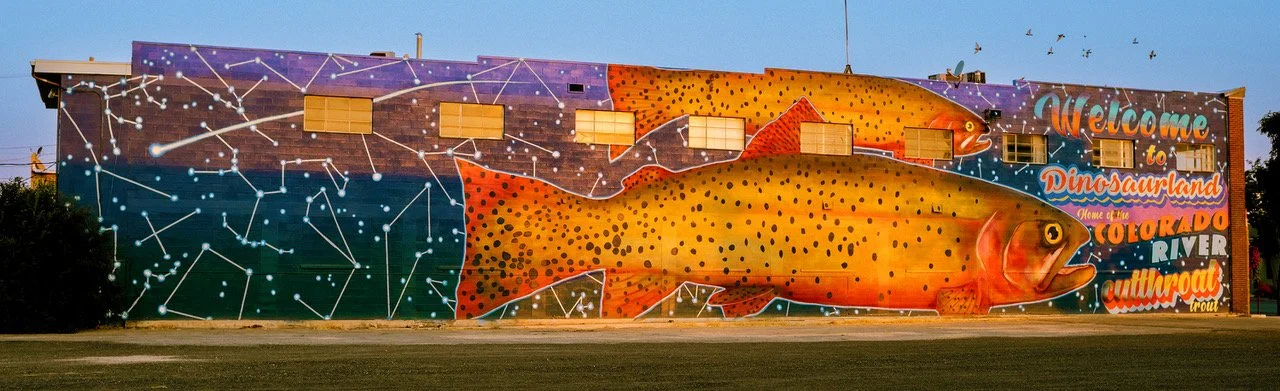
Dinosaurland Cutthroat (Vernal) – This mural highlights the Colorado River cutthroat in Vernal Utah. Painted by Chris Peterson with help from Caro Nilsson, Tiff Rainwater, and Josh Simms. Photo courtesy of Chris Peterson.
Utah artist Chris Peterson has transformed 14 blank walls across the state (with hopes of many more) into breathtaking murals of local wildlife. “The idea for me is about making it easier for people to have face-to-face wildlife encounters,” Peterson shared. “That’s the magic that inspires me when I paint wildlife murals.”
These murals are more than decorations; they speak to the wild heart of Utah, all while giving us the ability to connect with the species that live alongside us. “I recognized the power of this,” Peterson explained. “I have a unique skill set, and I’ve found a way to use it to celebrate the relationships we share with these animals.” He continued, “Even though conservation and habitats seem to be losing battles, and maybe some species that we know and love may not adapt to changing climate… and that’s sad. But we have an amazing opportunity right now to be able to experience these animals, and that’s what I choose to focus on. So that’s kind of the message for the wildlife walls.”
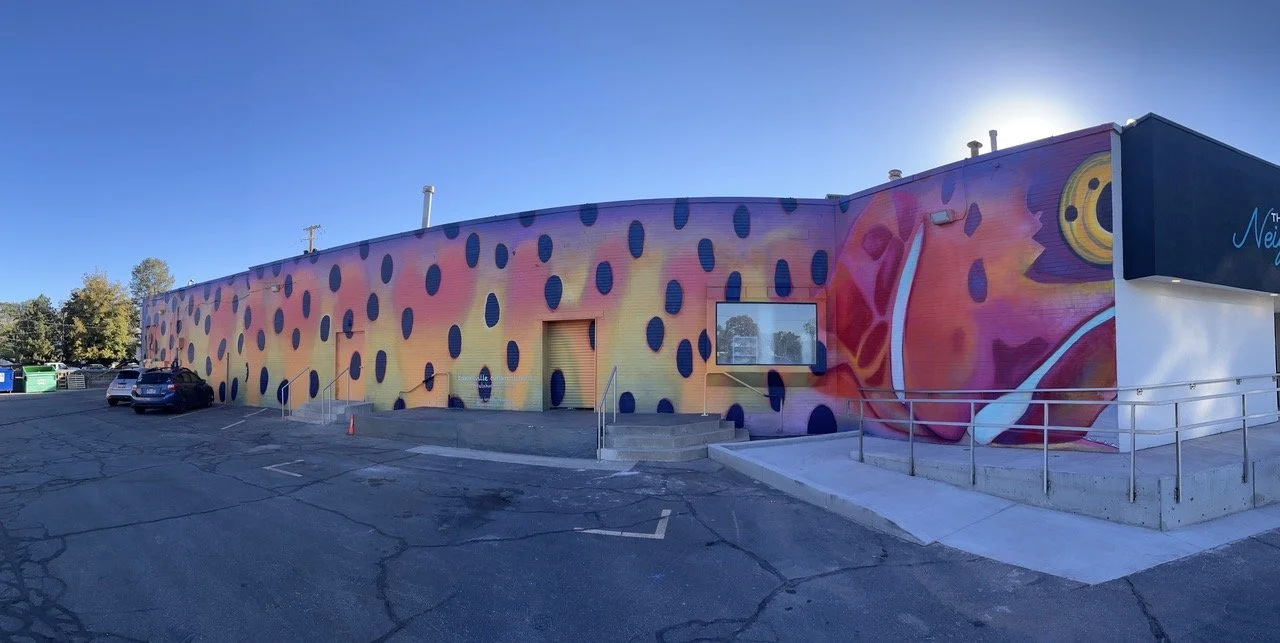
The Bonnie Wall (Sugarhouse) – This mural highlights the Bonneville cutthroat trout. Designed and installed by Chris Peterson. Photo courtesy of Chris Peterson.
Beyond that message, these wildlife murals hold a strong emotional impact. Peterson explained that anything that can help reduce anxiety these days is valuable. And since nature has been proven to be therapeutic, encounters with wildlife provide a powerful dose of that effect.
“I never really understood why alI I wanted to do was paint elk and trout and bears, until about 4 years ago [and] I was diagnosed with complex PTSD — turns out I had since I was 4 years old.” He shared, “My whole life I lived with unresolved trauma, and artmaking was kind of a subconscious thing that I didn’t even really have control over. That’s what I did to self soothe, and my subconscious also really liked spending time thinking and working around these wildlife encounters that I have had. That has kind of shaped my trajectory.”
Wildlife murals don’t just add beauty to streets; they bring a sense of reflection to the connection that people have with nature. Each mural invites us to pause and reflect on our relationship with the world we live in and the wildlife that we share it with.
“I use a lot of stars and constellations and galaxy stuff in my work to evoke questions of why are we here? Where did we come from? Where are we going?” Peterson explained. “I feel like doing that with the animals as a kind of muse makes it so that my audience is accessing that part of their consciousness, kind of hashing through some of those questions in their own way.” Peterson says he hopes these murals serve as a bridge between humans and nature, reminding us of what we risk losing.
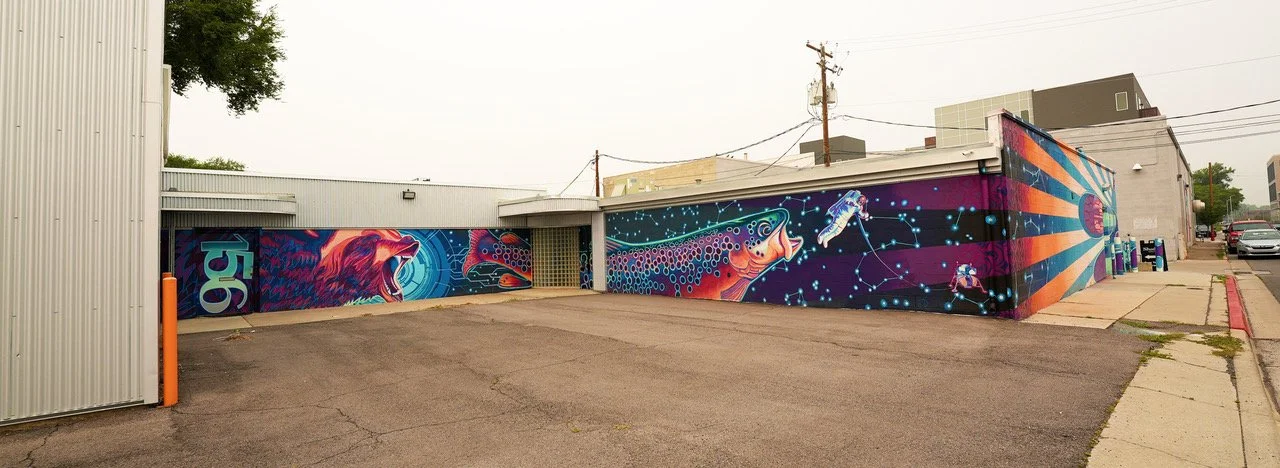
Utopia Mural Project (South Salt Lake) – This mural highlights the grizzly bear and the brown trout. Designed and installed by Chris Peterson. Photo courtesy of Chris Peterson.
On the Westside of Salt Lake City, development pressures like warehouse expansion, road construction, and poor air quality put stress on local ecosystems and wildlife. These aren’t just environmental impacts — they also impact our community’s health. Poor environmental conditions enhance stress, increase headaches, and add fatigue. That’s why these murals matter — they bring life into overlooked areas while healing something inside of us. They help refocus our minds to live in oneness with the wildlife around us.
“I would love to put more murals [on] the Westside,” Peterson shared. “It takes one or a couple people who are passionate about it and once we find a wall, we get the money and get it going. But we need to find the wall.”
Utah Wildlife Walls were created with a deep message: to help people step away from everyday burdens to reconnect with art, nature, and themselves. By visiting these unique murals, you not only get to enjoy beautiful wildlife art, but you also get a chance to encounter that same wildlife.
Each artwork has a local animal and includes a custom QR code that gives information about the species and its habitat. Plus, there are chances to win monthly prizes. To enter those contests, visit any mural on the Mural Trail map, post a photo, and tag @wildlifewalls on Instagram. Visit wildlifewalls.org or follow @wildlifewalls for more details and mural locations.

“Golden Eagle: Águila de Fuego” (Midvale) – This mural highlights Phoenix, a golden eagle who survived a wildfire. It’s also inspired by the Mexican Flag. Painted by Chris Peterson with help from Uno Pelavacas, Gohar, and Brett Prettyman. Photo courtesy of Chris Peterson.
In places where there aren’t murals, there may be viewing stations instead — places where you can see wildlife in nature. On the Westside, there are two raptor viewing stations: one on the Parkway Trail and one on the Jordan River Parkway Trail, both near the Rose Park Golf Course. Here, you can look for raptors on tall trees or utility poles. The best viewing season is mid-spring to early fall in the early mornings and late afternoons. Wildlife Walls suggests visitors bring binoculars to get a closer look without disturbing the birds.